Structural Drying in Cranston, RI
The plumber fixed the pipe on Tuesday. You mopped, ran a box fan, and by Thursday the floor looked fine. Now it is the next week and the baseboard has a dark line along the bottom, the dining room smells like a wet basement, and the oak floor has a ridge in it you can feel with your foot. We connect you by phone with an independent local provider who dries wet building materials in Cranston, Providence, and the towns around them.
What the crew does first
The crew meters everything the water could have reached: the wall the pipe was in, the floor around it, the ceiling below, the sill plate in the basement. They compare each reading to a dry part of the same material in the same house, because a 1930s plaster wall and a 1990s drywall wall do not read the same when dry.
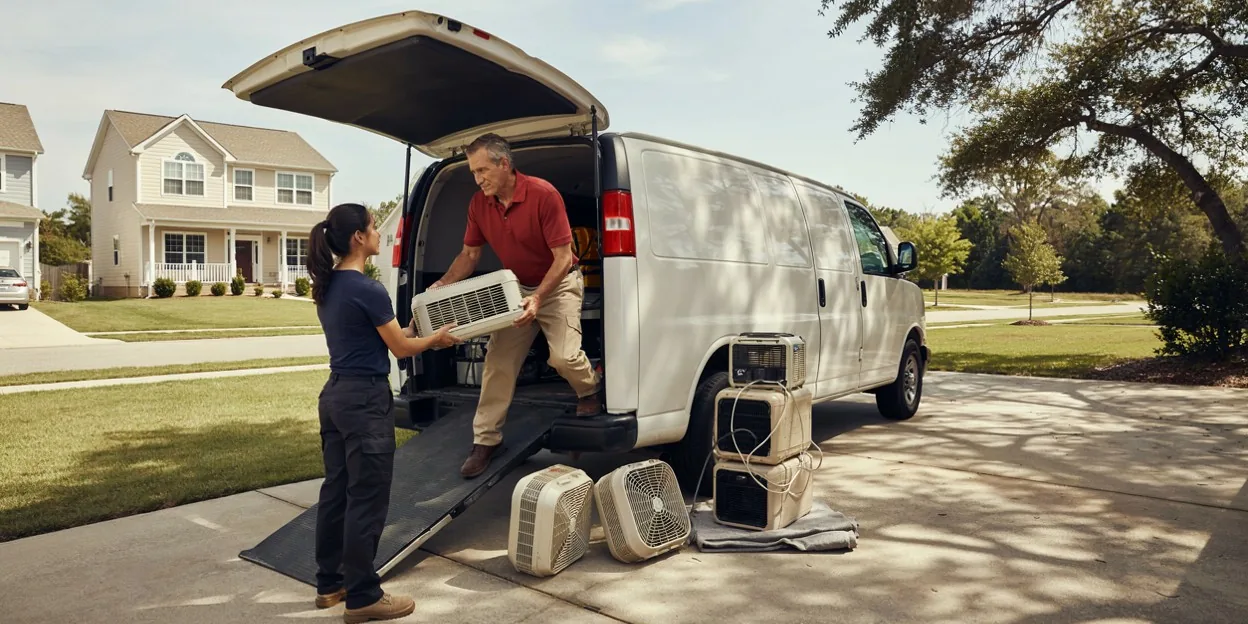
Then they place equipment by the map, not by the puddle. Air movers push air across the wet surfaces so moisture can leave the material. Dehumidifiers pull that moisture out of the air so it does not settle somewhere else. In a wet wall they may drill small holes behind the baseboard and blow air into the cavity instead of tearing the wall open.
What to do in the next hour
Turn on the heat if the house is cold, because warm air holds more water and dries faster. Do not turn on the central air. Pull rugs off wood floors and move furniture off the wet area so air can reach it. Open closet and cabinet doors along the wet wall.
Do not paint, caulk, or put the baseboard back. Closing up a damp wall hides the problem instead of fixing it. Take photos of the stain, the floor, and anything that has changed shape, then call us. If there is still standing water, that is a water extraction job first, and drying starts once it is gone.
What is usually saved and what is not
Framing, sill plates, subfloor, and plaster on lath usually dry in place if the crew reaches them within a few days. Drywall that stayed wet less than a couple of days can often be dried; drywall that sat a week, or that swelled at the bottom, comes out. Insulation behind a wet wall almost always comes out because it holds the water against the studs.
Hardwood is the question mark. Cupped oak or pine that is caught early can often be brought back with floor-drying mats over several days. A floor that has crowned or buckled has usually gone past saving. The crew meters the boards and the subfloor under them before anyone pulls a plank. Equipment typically runs three to five days, and the crew comes back to read the meters, move things, and decide when the targets have been met.
Providence County notes: drying an old house in a damp climate
Rhode Island humidity works against you. A basement with a stone foundation in Edgewood or Elmwood sits at high humidity most of the summer even when nothing has leaked, so opening the windows does not dry a wet wall. In February, the outside air is dry but the house is closed up, and a pipe that split in the cold soaks a wall that then sits at 60 degrees. Either way, controlled drying with dehumidifiers is what gets the readings down.
Plaster and lath, horsehair plaster in the oldest Providence houses, tongue-and-groove subfloors, and balloon framing that runs from the sill to the attic all change how water travels and how it leaves. A crew that dries triple-deckers and capes every week knows a wet first-floor ceiling usually means a wet second-floor subfloor and a wet wall cavity in between.
Many policies cover the drying that follows a sudden loss. Ask the crew to log the readings on every visit, with dates, so the drying record is part of the file your adjuster sees.
Calling about structural drying
Tell us what got wet, when it happened, and whether the source has been fixed. Say which rooms are involved, whether the floor is wood, tile, or carpet, and whether the ceiling below has changed. Call (401) 443-9638 now and tell us what you see.